

#26 - SCOTUS Hears Transgender Sports Case
New Changes Coming to the Newsletter!

Welcome back to Lex Liberas, where the constitutional issues of today are covered concisely, clearly, and even conservatively. With my recent move to college, the format will undergo some changes, with bigger news coming in the near future. Until then, expect the newsletters to be combined with the full articles on one day each week, with a paywall for the article portion. The new weekly editions will go out each weekend between Friday and Sunday, depending on the news cycle. To read the article portion, make sure to sign up here:
After that, please consider sharing this post with a friend.
Alright, let’s get into it!
News Desk - This Week’s Top Ten Headlines
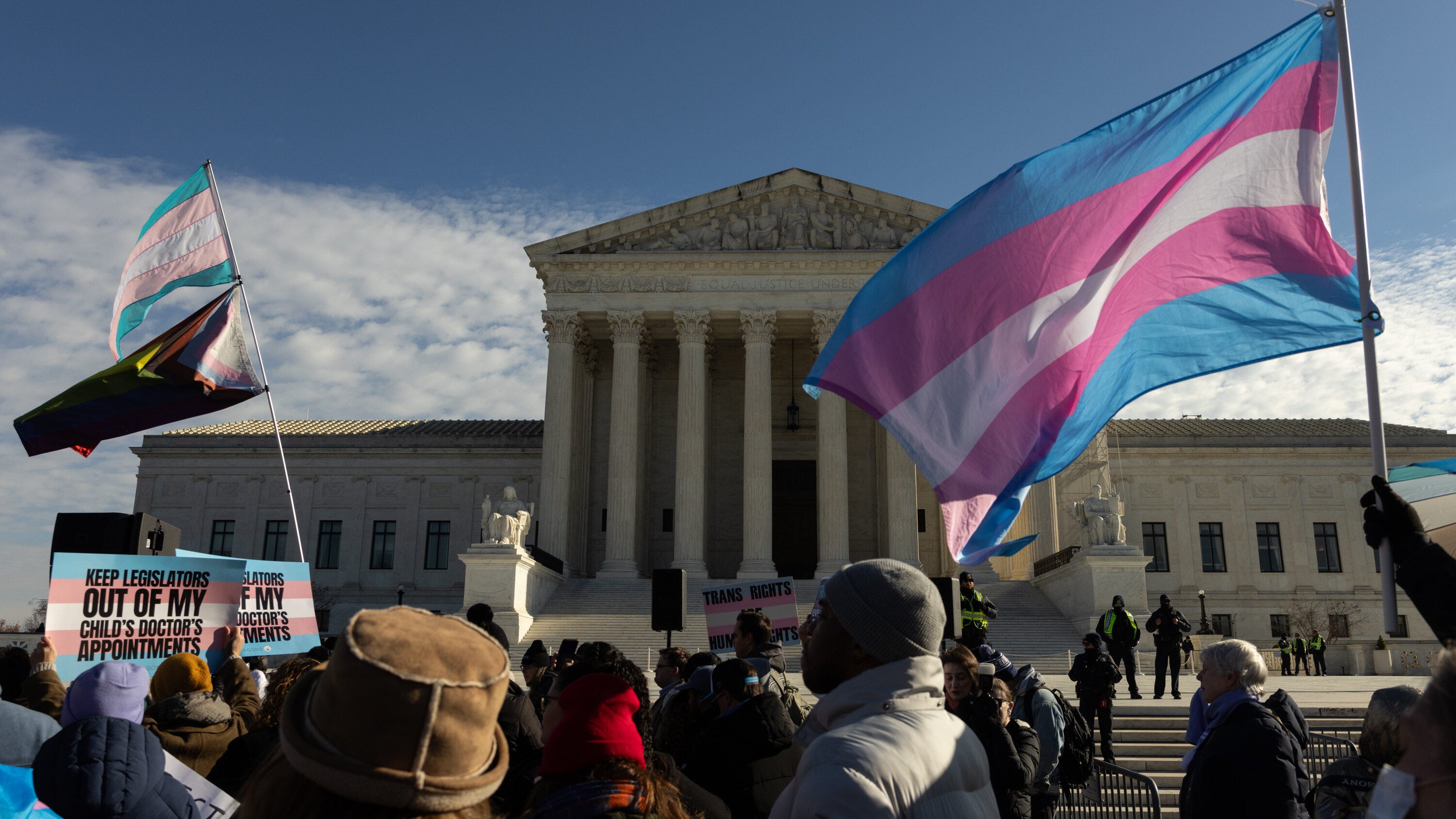
Supreme Court Poised to Rule for Transgender Bans in School Sports
Atop this week’s headlines is the Court’s recent oral argument in West Virginia v. B.P.G. over whether the Constitution or federal civil rights law contain a right for transgender students to compete in school sports. The consolidated cases from Idaho and West Virginia each challenge state laws barring transgender girls from competing on girls’ and women’s school sports teams, and ensure competition stays within biological boundaries. On Tuesday, the Court’s majority appeared inclined to uphold the laws, with a common-sense definition of fairness lingering over their questions. Justice Kavanaugh, for example, highlighted the “zero-sum” nature of team sports and the impact on opportunities for biological girls. A decision will likely affect similar laws in over two dozen states and allow states to best determine how to address school sports competitions.
Supreme Court Releases First Major Opinions of the Term
Following its quiet release of opinions last Friday, the Court released opinions in three cases on Wednesday: Barrett v. United States, Case v. Montana, and Bost v. Illinois State Board of Elections. In Barrett, Justice Jackson wrote for the Court holding that Congress did not authorize dual convictions under overlapping federal gun statutes for a single act, reversing part of the Second Circuit’s ruling on double jeopardy grounds. Justice Kagan, writing for the Court in Case, held that police may warrantlessly enter a home based on an objectively reasonable belief that emergency aid is needed (in this case, a reported suicide threat), without requiring probable cause. While both Barrett and Case were unanimous, Bost, written by the Chief Justice, held by a 7-2 margin that a congressional candidate had standing to challenge state rules allowing mail-in ballots received up to 14 days post-Election Day (if postmarked by Election Day) as conflicting with federal election-day statutes. Justices Barrett and Kagan concurred on narrower grounds, and Justices Jackson and Sotomayor dissented without their fellow liberal. While speculation over the fate of the tariffs case continues, complex opinions take lengthy time to write - Case took three months for an 11-page majority plus concurrences. Nonetheless, the longer the delay, the more likely a win becomes for the Trump administration. The Court is expected to release opinions on Friday. For more on the Court’s other mail-in ballot case, see last month’s article on the subject below.Court of Appeals Reverses District Court in Mahmoud Khalil Case
The Third Circuit narrowly reversed a district court ruling on Thursday, holding that the lower court lacked jurisdiction over Mahmoud Khalil’s challenge to his ICE detention and potential deportation. A 2-1 panel of the court found that federal immigration law channels such claims through removal proceedings rather than habeas review at this stage. This allows the Trump administration’s efforts to proceed, though Khalil’s team may seek en banc review or further appeals, especially his current suit centering on First Amendment retaliation claims tied to his campus activities.Supreme Court Takes Up Cases on Geolocation Monitoring and RoundUp
On Friday, the Court granted certiorari in four new cases for its current term, with disputes over the Fourth Amendment, federal preemption in product liability, patents, and other matters. In Chatrie v. United States, the Court will review the constitutionality of “geofence warrants” as used by police to obtain location data from Google for users near a crime scene. The case began with Okello Chatrie’s 2019 armed robbery conviction in Virginia, where lower courts upheld a warrant’s use despite its credible Fourth Amendment challenges. The justices also agreed to hear Monsanto Co. v. Durnell, addressing whether the Federal Insecticide, Fungicide, and Rodenticide Act preempts state measures against Roundup’s alleged cancer risks when the EPA has not mandated such warnings on labels. Finally, the Court took up Hikma Pharmaceuticals v. Amarin Pharma on generic drugmakers’ potential liability for inducing patent infringement via labels that carve out patented uses, and Anderson v. Intel Corporation Investment Policy Committee on pleading requirements for ERISA claims involving underperforming retirement funds. More orders are expected on Tuesday.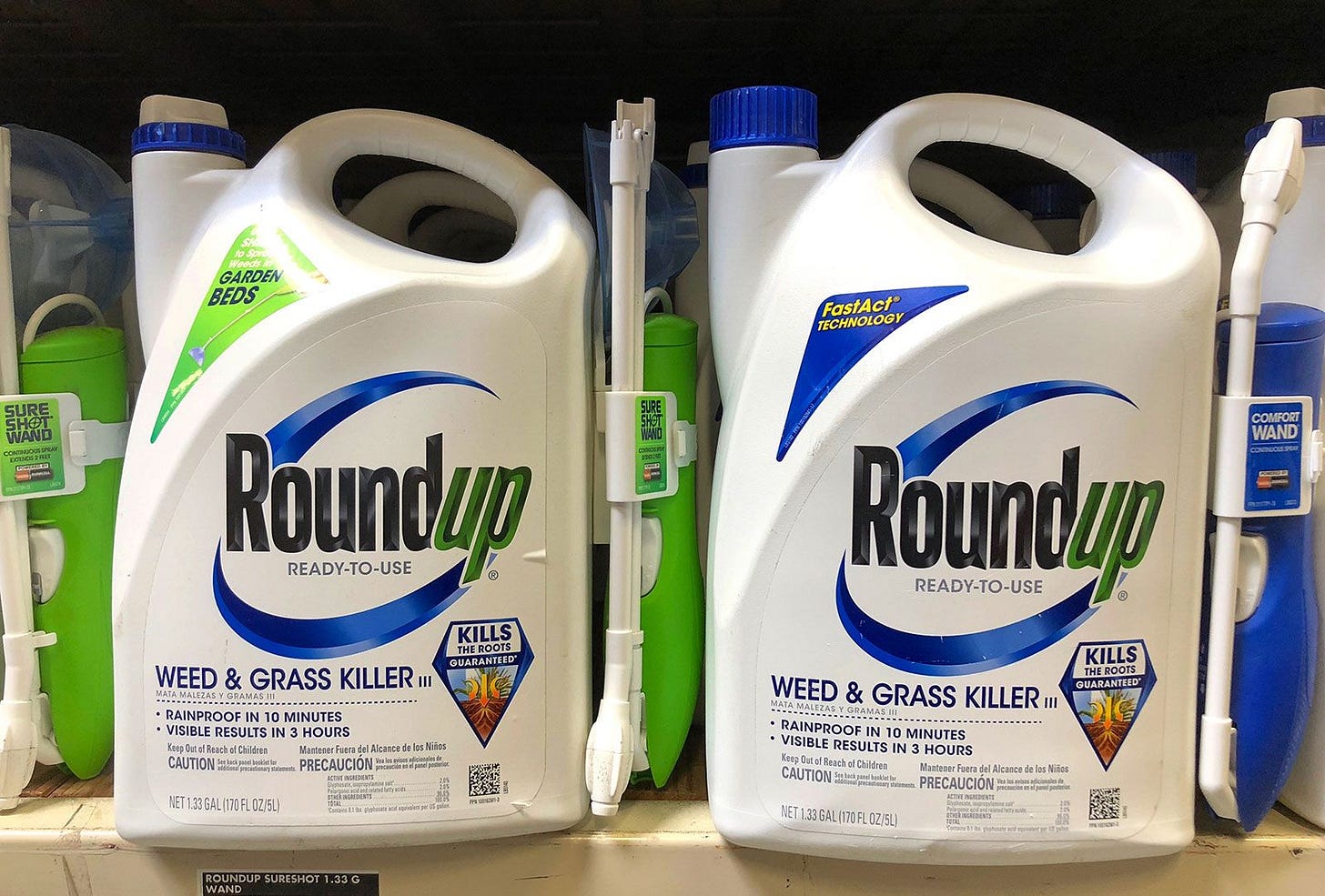
Roundup. Image Credit: Brittanica. California Given One Week to Respond in Parental Rights Case
Last week, Justice Kagan requested the state of California respond to an emergency application filed by the Thomas More Society in Mirabelli v. Bonta by January 21. Concurrently, additional motions for en banc review are pending in the Ninth Circuit. The Society filed the emergency application with the Court earlier this month, seeking to vacate a stay issued by the Ninth Circuit. The stay paused a December injunction from a district court that blocked California’s “gender secrecy” or “parental exclusion” policies, which prohibit school staff from notifying parents about a student’s gender identity changes without the student’s consent. The district court ruled these policies violate parents’ fundamental rights to direct their children’s upbringing and teachers’ First Amendment free speech and free exercise rights. The Ninth Circuit granted the state’s stay pending appeal, finding the injunction overly broad and likely erroneous on the merits, because of course schools can just transition kids without parental consent. That’s just fine.DOJ Responds to District Court’s Investigation of Lindsey Halligan
On Tuesday, the DOJ filed a sharply worded response in United States v. Jefferson to an order from a district judge, defending Lindsey Halligan’s continued use of the title “United States Attorney” in court filings despite a November ruling that her appointment violated federal law and the Appointments Clause. The earlier ruling led to the dismissal of indictments against James Comey and Letitia James in separate cases. The DOJ argued that the current dismissal orders were limited to those specific prosecutions, did not enjoin Halligan from performing duties or using the title elsewhere, and did not create binding precedent district-wide or require the Executive Branch to abandon its legal position that her appointment remains valid pending appeal. Citing Supreme Court precedents rejecting the notion that one district judge’s view binds the government universally, the DOJ emphasized a notion of separation of powers preventing judicial threats of attorney discipline to enforce conformity. Halligan’s fate remains up in the air following Alina Habba’s recent resignation.DHS Sued Over ICE Facility Access Blocks
Continuing their legal resistance to the Trump administration’s immigration policies, a group of Democratic House members filed a motion in Neguse v. DHS requesting an emergency order to show cause and hearing against DHS Secretary Noem. They allege Noem’s January 8 memo, which set a seven-day advance notice requirement for members of Congress to visit ICE detention facilities defies a December court order blocking a similar policy. The plaintiffs contended it is practically impossible for DHS to implement this policy exclusively with funds from the One Big Beautiful Bill Act, as it would require segregating vast expenses across the agency and facilities nationwide from regular appropriated funds. The motion comes after a January 10 incident where Reps. Ilhan Omar, Angie Craig, and Kelly Morrison were initially allowed but later denied entry to an ICE facility in Minneapolis’s following the shooting of Renee Good.Satanic Temple Loses Attempt to Claim Abortion Rights in Indiana
The Seventh Circuit unanimously affirmed the dismissal of Satanic Temple, Inc. v. Rokita earlier this month, ruling that the non-theistic organization lacked Article III standing to challenge Indiana’s ban on telehealth meetings over abortion-inducing medication. The court held that the Temple failed to establish associational standing on behalf of its members because it relied on statistical probabilities rather than identifying any specific, injured member who suffered a concrete, particularized harm. For organizational standing, the court found no credible, imminent threat of prosecution as the Satanic Temple presented no concrete plans to violate the law, operates no Indiana clinic, employs no Indiana-licensed physicians, and has no ties to qualifying hospitals/surgical centers—plus, even if enjoined, other unchallenged Indiana statutes (e.g., separate telehealth bans and hospital-admitting-privileges rules) would independently bar its desired telehealth “Satanic Abortion Ritual” services. The decision did not question the allegedly religious nature of the Temple.

Supreme Court to Review Law Banning Guns on Private Property Next Week
Tomorrow, the Court will hear oral argument in Wolford v. Lopez, addressing whether Hawaii’s post-Bruen law violates the Second Amendment by prohibiting concealed-carry permit holders from bringing handguns onto private property open to the public (e.g., stores, restaurants, gas stations) unless the owner provides express permission. The 2023 law, flips the traditional presumption: instead of allowing carry unless prohibited, it defaults to a ban unless the property owner consents. The Hawaiian petitioners argue the requirement effectively nullifies Bruen’s public-carry right by criminalizing carry on most everyday private property, lacking any relevant Founding-era analogue. Hawaii defends the law as outside Second Amendment protection or, alternatively, consistent with colonial-era consent requirements for developed/fenced lands. In September, the Ninth Circuit agreed with the state, finding a tradition of owner-consent defaults for firearms on private property. The Trump administration has filed an amicus brief against the law, arguing it lacks historical analogue.OLC Releases Opinion Allowing the Mailing of Select Firearms
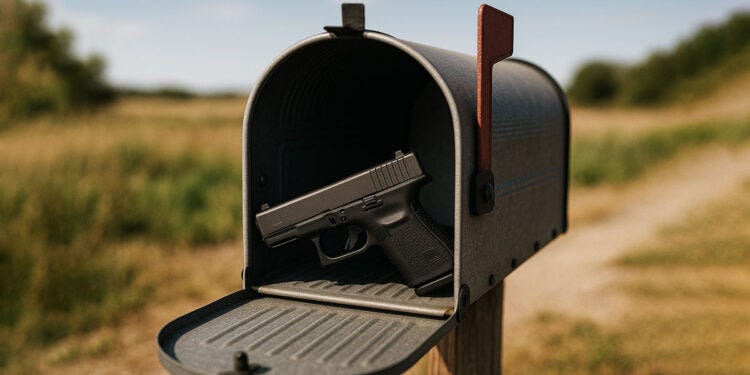
On Thursday, the DOJ’s Office of Legal Counsel (OLC), in a memorandum opinion signed by Assistant Attorney General T. Elliot Gaiser, concluded that a 1927 federal law prohibiting the mailing of “pistols, revolvers, and other firearms capable of being concealed on the person” is unconstitutional as applied to firearms protected by the Second Amendment. The OLC determined the law substantially burdens core Second Amendment rights by impeding lawful transportation of handguns for self-defense, target shooting, hunting, acquisition, and maintenance, effectively creating a near-total ban on direct mail for law-abiding citizens. Applying the Supreme Court’s framework from Bruen and United States v. Rahimi, the opinion found no relevant historical tradition of regulating firearm shipments, and characterized the statute’s purpose as illegitimately suppressing traffic in protected arms rather than serving a permissible safety or regulatory goal. Accordingly, the DOJ may not enforce the law against most firearms, and the U.S. Postal Service will revise its regulations to allow such mailings by private citizens, though enforcement can continue for unprotected items. The opinion follows a string of OLC memos that have begun to reshape the DOJ’s approach to everything from war crimes to welfare to gun rights.
Picks of the Week - Articles Worth Your Time
Case v. Montana and the General Law Approach to the Fourth Amendment
By Dan Epps for Divided Argument
A helpful breakdown of a few threads in the recent Fourth Amendment case.
What Happens if Trump Invokes the Insurrection Act?
Video from Executive Functions
Given this move may come sooner than later, this video may be worth a watch.
7 Predictions for the Legal World in 2026
By David Lat for the Original Jurisdiction
For better or worse, #5 is probably true.
Quote of the Week
“These days, federal and state criminal codes have exploded, with scores of repetitive offenses on the books.”
J. Gorsuch in Barrett v. United States
Quick Notes
I will be back in this spot next week with a recap of Wolford and a preview of the Court’s argument in the Lisa Cook case over the Federal Reserve Governor’s firing.
Thank you for reading. Please like or comment, and I’ll be back this weekend!
In liberty,
Ethan Savka
Thank You Ethan for keeping me informed! A well written article!