

#28 - Ice, Lemons, & Sunshine
ICE Rulings, Lemon motions, & SCOTUS Stuff

Welcome back to Lex Liberas, a (flu-delayed) newsletter covering the many institutions and movements surrounding today’s constitutional debates. To read my humble contribution to that debate below, make sure you’re signed up here:
Otherwise, please consider sharing this post with a friend:
Alright, let’s get into it!
News Desk - This Week’s Top Ten Headlines
Supreme Court To Release Opinions Next Week
The Court announced on Friday that it will release opinions on February 24th and 25th. The announcement comes after months of speculation over the Court’s unreleased decision in the tariffs cases, which were argued three months ago last week. During a CBS interview Tuesday, Justice Ketanji Brown Jackson (fresh off a controversial appearance at the 2026 Grammys) reassured us that “it takes time to write.” At this point, the odds are decidedly in the administration’s favor, though nothing can be guaranteed aside from the high probability that at least five justices write opinions in the case. For more on tariffs, see my November recap of the oral argument here.
SCOTUS Schedules Ten Cases, Including Immigration Case, for Argument
With less than half of its October 2025 term remaining, the Court released its oral argument schedule for April. Among the ten cases listed, Bondi v. Lau deserves a watch. The case concerns when the government, to remove a lawful permanent resident (green card holder) who committed a deportable offense and was paroled into the U.S. upon reentry, must prove by “clear and convincing evidence” that the alien was an “applicant for admission” under federal law rather than an admitted permanent resident. The case stems from Muk Choi Lau, a Chinese national who was charged with trademark counterfeiting in 2012. Lau briefly left the U.S. while charges were pending, and upon return was paroled into the country (instead of admitted) based on the pending charge. After his 2013 guilty plea, DHS initiated removal proceedings. The Second Circuit ruled in Lau’s favor in last year, holding that immigration officers lacked authority to parole him without clear and convincing evidence of the offense at reentry, prompting the Trump administration’s successful cert petition to the Supreme Court. A ruling for the government would expand DHS’s ability to remove green card holders with pending or later-proven criminal charges by treating them as inadmissible upon reentry.New York Republicans Challenge Redistricted Map
In the latest news surrounding state redistricting, New York State Board of Elections officials joined Congresswoman Nicole Malliotakis (R-NY-11) and NY voters in filing an emergency application to the Supreme Court over a ruling by the State Supreme Court. The state court declared New York’s 2024 congressional map’s redrawing of the 11th Congressional District (CD-11), represented by Malliotakis, unconstitutional under the state constitution for diluting the votes of Black and Latino voters, based on evidence of racially polarized voting. The court rejected plaintiffs’ reliance on the New York Voting Rights Act, but adopted a novel three-pronged “crossover district” test requiring districts where minority voters can select their primary candidates of choice, see those candidates (usually) win the general election, and become “decisive” in selections. Using this court-created test, the court found the current map failed under a totality-of-circumstances analysis and enjoined state officials from conducting “any” election under the 2024 map, and ordered the state Independent Redistricting Commission (IRC) to reconvene and propose a new map by February 6, 2026. The application requested a ruling by February 23, and Justice Sotomayor quickly ordered a response to be filed by February 19. Petitioners face an uphill battle before a Court that has allowed both Texas and California to survive racial redistricting challenges.DOJ Files Evidence of a Search Warrant for 2020 Fulton County Ballots
According to a recent court filing, on January 28, FBI Special Agent Hugh Raymond Evans obtained a federal search warrant authorizing a search of the Fulton County Election Hub in Fairburn, Georgia, for evidence of violations of federal law, tabulator tapes, scanned ballot images, and voter rolls from Fulton County. The affidavit cites allegations of impropriety in Fulton County as prompting an FBI criminal probe into potential legal violations, initiated from a referral by Kurt Olsen, the Trump administration’s Director of Election Security and Integrity. The warrant establishes probable cause that unknown persons committed these federal offenses, allowing review of seized electronic data by FBI, DOJ attorneys, and additional intelligence experts. The warrant was signed by U.S. Magistrate Judge Catherine M. Salinas and remains under seal.


Court Blocks Trump Administration’s Attempt to Censure Senator Kelly
Senator Mark Kelly’s motion for a preliminary injunction in his lawsuit against Secretary Pete Hegseth was granted on Thursday. The injunction halts the Pentagon’s efforts to censure Kelly for his criticism of the Trump administration’s military operations in Venezuela and federal use of the National Guard. Kelly most infamously contributed to a November 2025 video with fellow Democratic members of Congress urging active military to refuse illegal orders. Hegseth then opened a military review into Kelly, culminating in a January 5 Secretarial Letter of Censure against the Senator for allegedly undermining the chain of command, counseling disobedience, and conduct unbecoming an officer; this triggered proceedings to potentially reduce Kelly’s retirement rank and pay, plus criminally prosecute him should he continue speaking out. The court ruled that Kelly’s First Amendment retaliation claim is justiciable, that no precedent extends military speech restrictions to retired service members, and that full civilian-level protections apply here. The injunction blocks enforcement of the censure, the retirement grade proceeding, and further retaliation based on Kelly’s speech pending full resolution of the case.Fifth Circuit Upholds Ballot Harvesting Ban
In La Union del Pueblo Entero v. Abbott, the Fifth Circuit reversed a district court’s ruling enjoining enforcement of a key provision of Texas’s Election Integrity Protection Act. The challenged provision criminalizes “vote harvesting services” as a state felony when a person knowingly provides or offers specified assistance for delivering votes for a specific candidate or measure, particularly in the context of in-person interactions involving mail ballots or in the physical presence of an official ballot. Plaintiffs argue the ban is unconstitutional under the Fourteenth Amendment and constituted an impermissible content-based restriction on protected political speech under the First Amendment. The district court had agreed in a ruling issued weeks before the 2024 election. The Fifth Circuit panel unanimously reversed on Thursday, holding that the district court erred in granting facial relief based on hypothetical scenarios rather than actual enforcement or a record showing substantial overbreadth or vagueness in all applications. The court emphasized deference to election integrity laws in pre-enforcement challenges, noted mail ballots’ higher fraud risks, and found the ban consistent with the First Amendment. The ruling reinstates full enforcement of the ban, a win for Texas officials the RNC, who participated in the litigation.Don Lemon Pleads Not Guilty in Federal Case
Charged under the same federal law used to prosecute abortion protestors, Don Lemon pled not guilty on Friday. Lemon’s attorneys also filed a motion challenging the validity of his indictment after the DOJ unsuccessfully tried to secure arrest warrants for Lemon from a judge three times. The charges follow Lemon’s unusual method of church attendance last month, during which he followed a group of protestors into an active church service and argued with the pastor and other attendees. Lemon faces charges under the FACE Act, which was used by the Biden administration to selectively prosecute protestors outside of abortion clinics while allowing worse violations of the law to occur at churches and crisis pregnancy centers. After taking office last year, President Trump pardoned 23 of the protestors prosecuted under the prior administration. Lemon is the first person the administration has prosecuted under the FACE Act.
Court Rules Against ICE as Trump Withdraws Enforcement From Minnesota
A district court in Minnesota granted a TRO in a case brought against DHS and ICE. The ruling addresses allegations that, during a large-scale immigration enforcement operation, ICE systematically denied noncitizen detainees meaningful access to counsel, in violation of their Fifth Amendment due process rights. The court found that plaintiffs presented detailed evidence of barriers including rapid out-of-state transfers without notice, limited or non-private phone access, refusal of in-person attorney visits, inaccurate or delayed updates to the detainee locator system, and pressure to sign removal forms without legal consultation. The order, effective for two weeks (until February 26), requires ICE to provide detainees with immediate written notice of their rights to legal resources in multiple languages, ensure free confidential phone access to counsel, allow in-person legal visitation, refrain from transferring detainees out of Minnesota for the first 72 hours of detention, and avoid retaliation against those involved in the litigation. A status conference is scheduled for February 24, 2026, to review compliance and next steps toward a potential preliminary injunction. The order comes as Border Czar Tom Homan announced a “conclus[ion]” to ICE operations in Minnesota.
Trump Administration Sues Harvard Over Admissions Data
On Friday, the DOJ filed a lawsuit against Harvard University seeking to compel the release of detailed admissions records. The complaint alleges that Harvard has violated Title VI related federal regulations by failing to fully cooperate with a compliance review from last year, which aims to determine whether the university continues to discriminate based on race in its admissions processes following the Supreme Court’s ruling in Students for Fair Admissions v. Harvard (2023), which banned such discrimination. The DOJ claims Harvard has “slow-walked” its response and withheld critical applicant-level data despite repeated requests, extensions, and warnings of enforcement action. Harvard provided only partial, mostly public or aggregated documents in May 2025 productions and has not supplied the individualized data needed to assess compliance. The suit, tied to Harvard’s receipt of federal funding, also asserts breach of contract.Sunshine Darkens Over ICE Operations
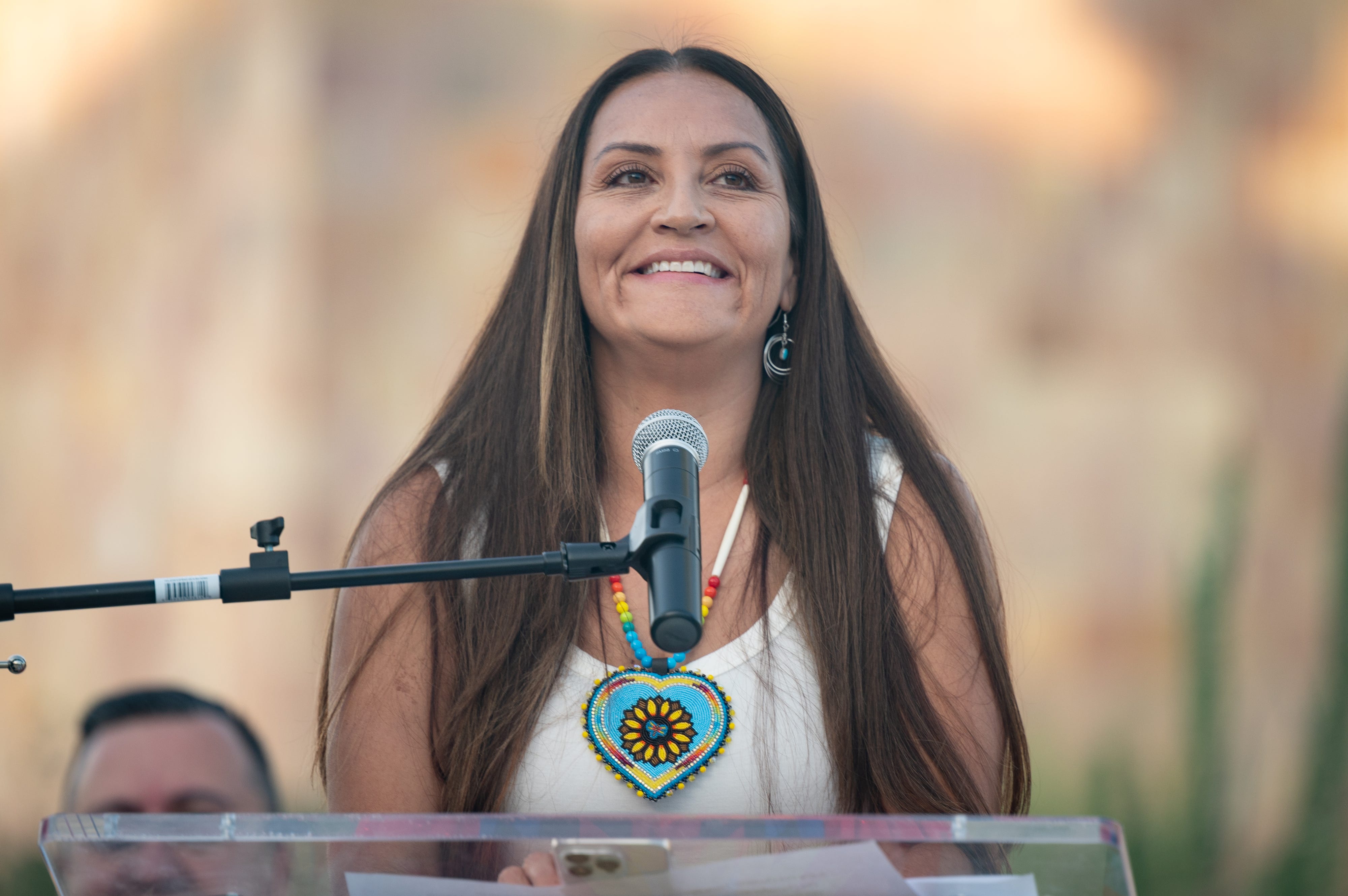
During a hearing on Friday, Biden-appointed Judge Sunshine Sykes sharply rebuked the Trump administration for defying her December 2025 declaratory judgment that noncitizens detained in the U.S. interior are entitled to bond hearings. Despite Sykes’s declaration, immigration judges continue denying hearings under Chief Judge Teresa Riley’s January directive that the ruling is not binding because it lacks injunctive force. The DOJ argued the judgment creates only a “tension” and cannot broadly restrain executive operations per Supreme Court precedent, while plaintiffs called the non-compliance an unlawful claim to be “above the law.” Sykes expressed frustration over separation-of-powers violations and is considering remedial notices to class members confirming bond rights.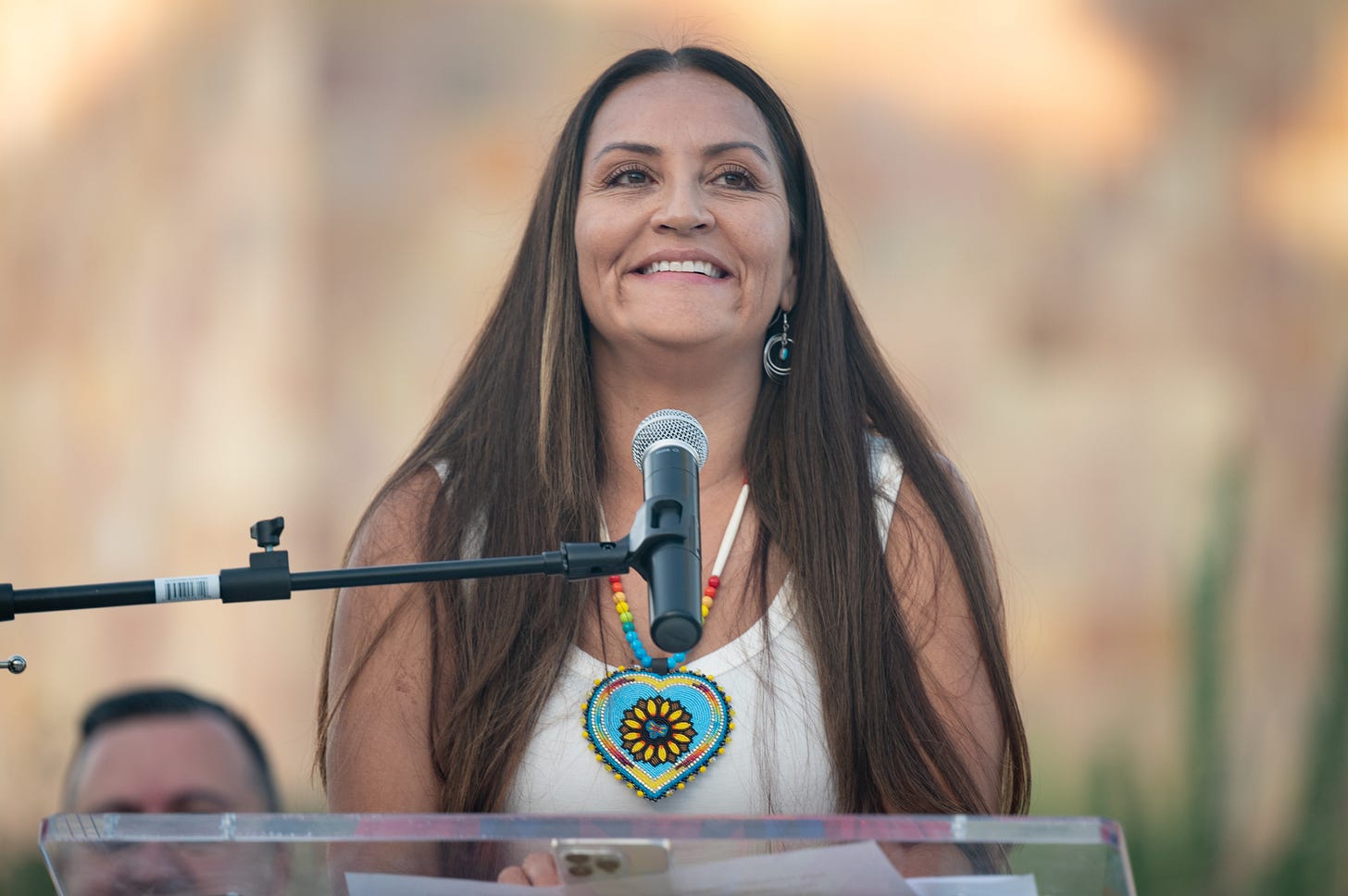
Judge Sunshine Sykes.
Picks of the Week - Articles Worth Your Time
President’s Day Lessons for America’s 250th Birthday
By Carson Halloway for the American Mind
Reviews some basic lessons America needs to learn for this overlooked holiday.
The Insignificance of Judicial Opinions
By Jesse Driver for the California Law Review
A more academic piece on the weakness of court opinions.
Justice Antonin Scalia’s Legacy
By AEI (Day One and Two)
Friday marked 10 years since Justice Antonin Scalia died, and in his memory, the American Enterprise Institute held a two day conference on his legacy.
Quote of the Week
“I don’t worry about my legacy. Just do your job right, and who cares?”
Justice Antonin Scalia, in a 2005 speech
This Week’s Note: Parental Rights and Secret School Transition Policies
In place of this week’s article, I have an exclusive treat for the subscribers of this newsletter. Last year, I joined the new E Pluribus Unum law journal, an online undergraduate law journal dedicated to publishing conservative pieces on constitutional law. My first piece will arrive with the forthcoming Spring 2026 print edition, and will be available on the journal’s website and reproduced in this newsletter when the time comes. Until then, please enjoy a preview of the first two sections!
